

ACADEMY OF DEVELOPMENT MANAGEMENT – INSTITUTE OF SKY POLITICS
The Chinese strategy is an endless path of cunning
Official statements.
In 2023, President of the Russian Federation V. Putin stated that Russian-Chinese relations are at their highest point in their entire history. At the same time, the relations of strategic interaction being built between Russia and China are not a military alliance.
According to Chairman of the PRC Xi Jinping, relations between Russia and China have become a model of cooperation between major powers. Political mutual trust between the PRC and the Russian Federation in the new era is growing ever deeper, the bonds of practical cooperation ever stronger, and cultural, humanitarian and interregional exchanges ever more vibrant.
In the eyes of the West, Russia and China remain close partners bound by a shared hostility toward America and its allies. The Russian Federation and the PRC form an axis, joined by the DPRK and Iran.
In the opinion of ill-wishers.
Even before the cooling of ties with the West caused by the Special Military Operation in Ukraine (which China did not support), V. Putin proclaimed a "pivot to the East" as a priority of the Russian Federation's foreign policy. But the PRC's main trading partners are the US and the EU, and not the Russian Federation at all, which creates conditions for cooperation to be more advantageous for the PRC than for Russia.
In 2024, trade relations between Russia and the PRC found themselves in a serious crisis. The crisis is linked to the refusal of Chinese banks to work with Russian companies because of US sanctions.
Russia's political and economic failures in developing the Far East have undermined its aspiration to the status of a great power in Asia. The new Russia is becoming China's junior partner and a supplier of raw materials, rather than an independent player in the Asia-Pacific region.

Military-technical cooperation between the Russian Federation and the PRC has the character of "pumping out" advanced military technologies from Russia (not counting the numerous cases of their direct theft), with a transition to producing unlicensed copies. Almost for free, the PRC received "Soviet space," which cost the USSR incredible efforts.
The signing and ratification of agreements on the state border along the fairways of rivers, with the transfer of a number of islands to the PRC, was met with hostility by patriotic circles in the Russian Federation, who regard them as a strategic concession to China's expansion.
Despite the declared agreement on the Russian-Chinese border, the Chinese side essentially does not consider the existing situation final and acceptable. State-controlled Chinese media operating inside the country continue to assert that a significant part of the territory of the present-day Russian Far East was torn away from China as a result of "unequal treaties," and China reserves the right to present Russia with "just demands."
The expansion of Chinese business into the Russian Federation's zones of advanced development in Siberia and the Far East has aggravated the severe environmental consequences of the activity of small entrepreneurs in agricultural production and logging.
In the public consciousness of the peoples of Russia and its elites, an ineradicable feeling of the "yellow peril" persists, whose political-science source is the American geopolitics of sea power of the late 19th century of Admiral Mahan.
Today the motifs of the "Chinese threat" are fed both by Western propaganda and by friends of the US dollar within the Russian Federation.
According to the assessment of Sky Politics theorists.
The pinnacle of Russian-Chinese relations was the period of the Great Friendship of 1950-1960, initially washed in the blood of the War of Resistance to American Aggression in Korea (1950-1953).
The Great Friendship was cemented by the Soviet-Chinese Treaty of Friendship, Alliance and Mutual Assistance, signed in Moscow on 14.02.1950
The foundation of the alliance was the red idea of liberating labor from the oppression of capital: the building of a bright future for all mankind – communism. Relations were built on the values of ideology.

In the years of the Great Friendship, the USSR (the elder brother – laodage) transferred to China the key military technologies of that time, including nuclear, missile, aviation, and radio-technical ones.
At that time the USSR and the PRC formed the core of Stalin's Socialist camp, which stood against the world of capital of the Western democracies.
Today Russian-Chinese relations are cemented by the Treaty on Good-Neighborliness, Friendship and Cooperation of 16.07.2001.
The foundation of good-neighborliness is not a community of values and shrines, but only the interests of the two countries in a multipolar world.
Values and shrines are not for sale. Interests always have a price, and therefore do not exclude the use of stratagems – cunning tricks – in deals.
Sky Politics holds that in the new era of the information society, with the transfer of the center of mankind's vital activity from the North Atlantic to the Pacific zone, on the crest of the tidal wave of the energy of the East, Russian-Chinese relations need to be raised from the level of good-neighborliness to the level of family of peoples of non-Western civilizations. With the signing of a new treaty.
The family lives by the ethic of relations between brothers and sisters, and ethics – what ought to be, what may be, and what may not be – stands above differences of ideologies and creeds. The unified state of Genghis Khan (Turkic: Yeke Mongol Ulus) was held together by the ethic of the "five above": the spiritual above the material, the common above the private, service above possession, justice above law, power above property. Specifically, what was forbidden was written down in the 64 points of the Great Yasa. And that was enough.
It should be recalled that in the 13th–14th centuries the peoples of Russia and China lived for 200 years in a single unified state of Genghis Khan from sea to sea. China was the Ulus of the Great Khan of the Yuan dynasty. The Russian principalities were part of the northwestern Ulus of Jochi (the Golden Horde). The peoples of Central Asia made up the Chagatai Ulus. And Iran and the Transcaucasus – the Hulagu Ulus. Today this is nothing other than the Shanghai Cooperation Organization, which has returned "to its own circles."
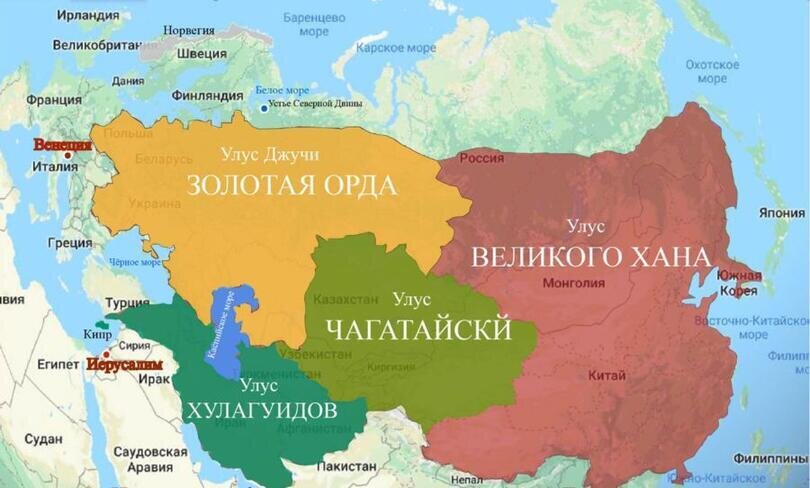
The future-oriented civilizational project Greater Eurasia – the Third Horde corresponds to the seers' prophecy about the transformation of Rus’ for a short time – 12 years – into a beacon of the true path for countries and peoples into the Community of Shared Future for Mankind.
Without a spiritual guidepost – Russia's lot being Universality, through supra-worldliness – the Chinese specificity will keep the implementation of the project of the Great Unification of the Center with the peripheries (Datong) within the framework of down-to-earth Chinese pragmatism, which has lost its sacred connection with Heaven – the Grace of the Spirit of Truth (DE).
The role and place of Sinological expertise in the Russian Federation.
The specificity of the five-thousand-year-old Chinese state-civilization is beyond doubt. The uniqueness of China's civilizational and cultural code, for understanding the origins and foundations of the behavior of the Chinese in politics, economics, and the social sphere, requires clear, professionally verified Sinological expertise.
Stalin had robust Sinology of the Comintern level.
The Soviet-Chinese split of the 1960s led to an ideological confrontation with a hypertrophied political component of relations, which persists to this day.
Perestroika and liberalism in the New Russia destroyed the remnants of strict Stalinist highly professional Sinology.
Today binary analytics of the current moment in the Sinology of the New Russia has completely broken away from an understanding of the quinary (2+3) civilizational code of China. And this is not someone's stupidity, but a political directive of the friends of the US dollar.
The main task of Sinology in the Russian Federation of the new era is to ensure the sincerity of joint Russian-Chinese economic projects, from the position of the soft power of common values and the ethic of the family of peoples, excluding cunning stratagems of hidden interests.
The pressing tasks remain the development of a long-term strategic vision by China and Russia of the foundations of world development, the formulation of common conceptual positions within the framework of the Greater Eurasia – Third Horde project, and the development of joint initiatives in the field of constructing the future.
Executed by Andrey Devyatov N1029 of 29.06.25

Comments 49
Андрей Васильев
Вадим, Родэ махровый царебожник. Армяне ещё хуже азеров, ибо возомнили себя чуть ли не "богоизбранным народом" Жить в Беларуси на любителя, тут приживётся хорошо тот кто родился. Такой латентный местечковый национализм (в хорошем смысле слова! ) И всё же надеюсь, что Девятов ответит - как преобразятся народы Новой Орды и почему они должны принять этику?
Original · translation not yet available
Анонимный участник devyatov.su
Ты не живёшь в России, а ты понаехала и пытаешься вымазать людей своими фекалиями. Ты же утверждала, что Россию и русских ненавидишь, восхваляла немчуру, говорила, что обожаешь Эуропу. Вот и вали туда! И воздух будет чище, и россиянам спокойнее. А Зигмунда Фрейда оставь в покое. Психиатры ещё займутся тобой, тема казахских истеричек до конца не исследована. Ты хороший подопытный материал.))
Original · translation not yet available
Анонимный участник devyatov.su
Фрателло 27 минут(ы) назад Дык, ты в нём живёшь Это ты Россию Гов…. Называешь? Я в ней живу!!!))ай , ай, нехорошо!!оговорки по фрейду у тебя!!
Original · translation not yet available
Анонимный участник devyatov.su
Дык, ты в нём живёшь! При чем здесь Фрейд и отец?)))
Original · translation not yet available
Анонимный участник devyatov.su
,,, Фрателло 9 минут(ы) назад Зарекалась ворона гов... не клевать ))) ВОТ ТЫ И СКАЗАЛ КТО ТЫ-ГОВ..! Все по Фрейду))это тебе от отца прилетело!!как и то что я тебе до этого говорила! На этом Все!! Думай и меняйся!-Отец!!
Original · translation not yet available
Анонимный участник devyatov.su
Мда, здесь нужен переводчик с ослиного языка! )) Есть здесь смельчаки, которые рискнут перевести этот бред "справедливости" на великий и могучий? "Им их говно ближе чем мы русские хорошие,приехавшие сюда!!)Проверено не только на себе, все так говорят кто приехал и все в ах.., от России и их нравов!!Но молчат , только попробуй покритиковать их нравы и такое услышите!! ВОН фрателло сразу за точку джи обещал повесить, доброй души человек))попробуй их погладить против шерсти!!сорян фрателло пишу правду и ничего кроме правды!!Вот пытаюсь вас расшевелить чтоб поменялись в лучшую сторону, но увы!!Вы над Жириновским ржали московские ,нашим Алма-атинским, а теперь пророком считаете! Тоже чужаком для вас был!!ПО ХОРОШЕМУ ВАМ НАДО ВСЕХ РУССКИХ К СЕБЕ ПОЗВАТЬ И жилье ИМ ДАТЬ, не то что гражданство!! Если бы не брат генерал, я бы его долго ждала!!многие русские ,без родни в России ,его не могут получить, нужна прописка, а кто пропишет незнакомого и работу у вас дают хорошую своим и диаспорным)), Ты или оторван от реальной жизни или дебил!!а скорее МИСОЧНИК ЗАЩИЩАЮЩИЙ СВОЕ ПОЛНОЕ КОРЫТО!! И знаешь я предпочту в голоде и в холоде жить с людьми , чем в тепле и сытости с шакалами как ты!!Думаю и Рижский тоже, хотя))"
Original · translation not yet available
Анонимный участник devyatov.su
Зарекалась ворона гов... не клевать )))
Original · translation not yet available
Анонимный участник devyatov.su
Так базалиому зимой 2024 определили, а в Крыму до этого отдыхала!! Хватит разборки наводить!! НЕ ВРУ Я!! Всегда говорю правду!! сПРАВеДливА я!! Надоел ты уже всем долбоящер)).все больше не буду с тобой говорить!!
Original · translation not yet available
Анонимный участник devyatov.su
Ага, базелиома была, но каждый год в Крыму загорает! Какая же ты умница! Никогда не врёшь...))) Генерал ещё не повесился? Что может быть хуже такой придурковатой сестры?
Original · translation not yet available
Анонимный участник devyatov.su
Поздравляю вас, Вадим! Бабуля готова с вами и с Девятовым "посидеть" с удовольствием на квадратном метре (как же мало надо этой грязнуле). )) Увековечим её фразу, пока она её не переделала или не удалила: "... пора бы поумнеть в 50 с хвостом))я с тобой на одном квадратном метре..,,,А вот с Рижским и Девятовым посидела бы с удовольствием, МЫ С НИМИ ОДНОЙ КРОВИ-КРАСНОЙ , А НЕ ГОЛУБОЙ ))КАК ТЫ И ПУ!!Разные у нас с тобой приоритеты!!
Original · translation not yet available
Анонимный участник devyatov.su
Понимаю тебя, старушка! СССР продавали НЕ коммунисты! Они просто были в КПСС.)) Сейчас ЕдРо состоит НЕ из бывших коммунистов, сплошь порядочные люди.)) Дайте бабушке скорее миску! Она проголодалась! ))
Original · translation not yet available
Анонимный участник devyatov.su
Нет Вадим! Я просто думала вразумлю неразумного,(отец у него настоящий коммунист был!!обидно за него как то) получается сын Плохиш за бочку варенья отца продал!! )не раз пыталась это сделать! Но до МИСОЧНИКОВ не ДОСТУЧАТЬСЯ ДАже ВАМ, где уж мне женщине , даже под ником Справедливость!! А в борьбе со справедливостью он ПРОИГРАЛ!! Ни одного аргумента ,один лай!!
Original · translation not yet available
Вадим Дурак.офф
Ваши отношения..это как Британия и Россия..2 стороны одной медали..Бриты делают все..чтобы похерить РФ..потому что зеркально..это ее отражение. Сама с собой воюет.. тут просто как монета (медаль) ляжет..По идее она должна лечь стороной России..но для этого ей придется измениться..В нынешнем же виде боевая ничья..) Пока ребром падает.
Original · translation not yet available
Вадим Дурак.офф
Меня не надо впутывать..Сразу почуял..что у Вас с Фрателло любофф..)) Не простая..но Вы друг без друга не можете..) Тянет магнитом. Инь-Ян.. Буря эмоций..Нет равнодушия.
Original · translation not yet available
Вадим Дурак.офф
У меня Империя ассоциируется с педром 1-м..который масон и содомит (в смысле его подменили) Есть верхушка..которая твАрит, что хочет..а народ холопы..который используют во все дыры.. В моем понимание должно быть какое то движение сверху вниз и снизу вверх..Обмен..Не наследование власти, а дать ее самым разумным..которых рождает НАРОД.. РОД.. Не "голубая кровь"..а нормальная.. Я за слияние элит и народа..Чтобы элита была бы народной..Лучшие из лучших..а не потому что его (ее) Папу когда то выбрали..и теперь его потомки..на которых Природа отдыхает..теперь бы рулила..Бездарно, глупо, продажно..Худшие из худших..И это все Империя..с его войнами и народом без прав..Только обязанности. В самой сути Империи заложена война (борьба за доминирование), где богема..нуу полное гамно. Пусть воюет не народ..а эти утырки.Гибнут млны..а достаточно тысячи ублюдков усмерить, чтобы был Мир.
Original · translation not yet available
Анонимный участник devyatov.su
Верьте Империям, за счёт кого существуют мелкие государства. У креветок Белоруссии есть своя Родина! ))
Original · translation not yet available
Анонимный участник devyatov.su
С ТЕМ и иди! Как я понимаю, рак у тебя рассосался (сама это писала). ))
Original · translation not yet available
Вадим Дурак.офф
Фрателло Я очень серьезно подумывал о переезде в БелоРусь..Хотя в РФ у меня много родни и было бы логичнее переехать туда..Но как то тянуло к бацке..Природа там потрясающая..как у нас в Латгалии..которая когда то Витебская губерния.. нооо..и тут не решился..А сейчас это стало архисложно (вбили клин утырки)..Буду доживать в LV..уж как нибудь..По Девятову..Родился с идеей коммунизма..кто знает, мож бриты устроят так..что даже увижу воотчию..что это такое..Чему нас учили. Тогда не принципиально где..ты встретишь мечту своего детства..) Против настоящего коммунизма я никогда не был против..Другое дело приспособленцы и ложь..которая сопровождала сей процесс..Гнилая человеческая натура..Тут я с Зю даже согласен..что Образ Исуса-это первый коммунист на Земле..) жаль, что выдуманный..Но мы ведь сказку можем сделать былью?
Original · translation not yet available
Анонимный участник devyatov.su
"Справедливость" и ты поспеши! Скоро форточка закроется (просто предупреждаю!). Русские не отвечают за глупость своих соотечественников! Картина жизни меняется, выскребай из Германии единственного сынка, пока долг в этой стране не закрылся, а у дитятки хватает денег для выезда! Я жалею каждого русского, если они не пришлые поганые свиньи из Казахстана! ))
Original · translation not yet available
Анонимный участник devyatov.su
Вадим, в последнее время мне нравятся ваши здравые рассуждения в отношении тенденций развития ситуации в мире (не почтите за лесть!). Если кто-то выбрасывает определённый материал в сеть, значит, это кому-то нужно. Хорошо, что вы обратили внимание на конъюнктурный фильм о "мавзолее Ленина"! Предполагаю, что определённые "красные гиены" на привязи к нищете и пишущие с ошибками, не оставят это без внимания! Надеюсь, что вы отнесётесь к этой истерике с юмором! )) Серьёзно подумайте в течение 3-х лет о переезде в Россию. Уверен, что некоторые маргиналы из Казахстана в России должны быть однозначно замещены грамотными людьми из Прибалтики! Обратный процесс, по данным миграционной службы, уже идёт. Россия уже задыхается от потомков Клима Чугункина других республик!
Original · translation not yet available
20 of 49 loaded